

Welcome to Genesys Automation Store

Working Principles of Industrial Pressure Sensors Explained
05 Aug, 2026
Blog Post

Working Principles of Industrial Pressure Sensors Explained

Learn how industrial pressure sensors work, measure pressure, and support process control with pressure transmitters and differential pressure sensors.

Working Principles of Industrial Pressure Sensors Explained

Introduction

Pressure sensors are essential components in modern industrial automation. They measure the force exerted by liquids or gases and convert it into a usable electrical signal. This information helps industries monitor processes, maintain safety, and improve equipment performance.

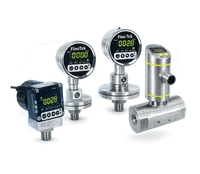
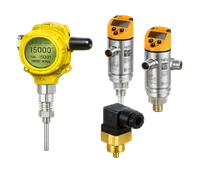
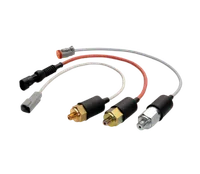
An Industrial Pressure Sensor can be used in hydraulic systems, pneumatic equipment, process plants, water systems, and manufacturing applications. GenesysUAE provides pressure measurement solutions designed for different industrial requirements.

How Pressure Sensors Work

The working principle is based on detecting changes in pressure through a sensing element. When pressure is applied, the sensing element experiences mechanical deformation. This change is converted into an electrical signal by the sensor's internal electronics.

The signal can then be sent to a controller, display, PLC, or monitoring system for further processing.

Common pressure measurement types include:

  • Gauge pressure
  • Absolute pressure
  • Differential pressure
  • Vacuum pressure

Role in Industrial Automation

A Pressure Transmitter UAE application can continuously transmit pressure readings to a control system. This allows operators to monitor process conditions and respond quickly when pressure moves outside the required range.

A Differential Pressure Sensor UAE measures the difference between two pressure points. It is commonly useful for monitoring filters, pipelines, tanks, and process equipment.

Benefits of Pressure Sensors

Pressure sensors help industries:

  • Monitor critical process conditions
  • Improve equipment safety
  • Detect abnormal pressure changes
  • Support automated control
  • Reduce unexpected downtime

For applications requiring reliable pressure measurement, selecting the correct sensor range, output signal, and sensing technology is important. Pressure Sensor Oman requirements may also vary depending on the process environment and operating conditions.

Conclusion

Pressure sensors convert pressure changes into measurable signals that support monitoring and automation. With the right pressure measurement solution, industries can achieve better process control, safety, and operational efficiency.

FAQs

1. What is a pressure sensor?

A pressure sensor detects pressure and converts it into an electrical signal.

2. Where are pressure sensors used?

They are used in manufacturing, hydraulics, pneumatics, water systems, and process industries.

3. What is a pressure transmitter?

A pressure transmitter measures pressure and sends a continuous signal to a control or monitoring system.

4. What is differential pressure?

It is the difference in pressure between two measurement points.

5. How do I select a pressure sensor?

Consider pressure range, media, accuracy, output signal, connection, and operating environment.

00 Comments

No approved comments yet. Be the first to add one.

Add a Review

Your email address will not be published. Required fields are marked *

Home Categories Brands