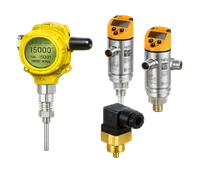
Analogue infrared temperature sensors with display are advanced industrial devices designed for precise non-contact temperature measurement in high-temperature and inaccessible environments. These sensors are widely used across manufacturing sectors such as steel processing, plastics production, and glass fabrication, where direct contact measurement is impractical or unsafe.
Key Features
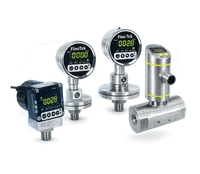
These infrared temperature sensors offer programmable analogue and switching outputs, enabling seamless integration into automated systems. The adjustable emissivity setting ensures accurate readings across different materials, while scratch-resistant precision lenses minimize interference from ambient light. The built-in display provides real-time temperature monitoring, improving process visibility and control.
Application
These sensors are ideal for monitoring hot surfaces, moving objects, or hazardous zones where traditional contact sensors fail. Common applications include furnace monitoring, extrusion processes, molten material handling, and continuous production lines. Their ability to measure temperature remotely enhances safety and reduces equipment wear.
Design & Functionality
Engineered with a rugged stainless steel housing, these sensors withstand harsh industrial environments including high temperatures, dust, and vibrations. The intuitive interface with pushbuttons allows quick configuration, while the test function enables easy system validation either directly on the sensor or via external control signals.
Total Crossed Beams
The sensor uses optimized infrared detection technology to ensure consistent and stable signal acquisition, even in challenging industrial conditions.
Beam Pitch Options
Flexible sensing configurations allow accurate targeting of specific zones or objects, improving measurement precision across various applications.
Intrinsic Synchronism
Reliable signal processing ensures stable and interference-free operation, even in environments with multiple heat sources.
Operational Advantages
By eliminating the need for physical contact, these sensors reduce maintenance costs and increase equipment lifespan. Their dual output capability (analogue and switching) enhances automation flexibility, while real-time display feedback improves operational efficiency and quality control.