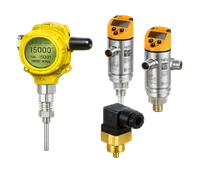
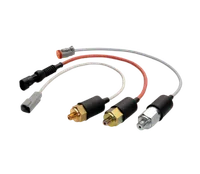
Capacitive proximity sensors play an essential role in modern industrial automation by enabling accurate non-contact detection of both conductive and non-conductive materials. These sensors are widely used in manufacturing, packaging, food processing, chemical plants, and water treatment facilities where reliable object detection and level monitoring are critical.
Unlike traditional sensors that rely only on metal detection, capacitive sensing technology can detect a wide range of materials including liquids, powders, plastics, ceramics, glass, and granular substances. This capability makes the sensor highly versatile for industrial production lines and smart manufacturing systems.
Designed for demanding environments, the capacitive proximity sensor supports reliable automation control, process monitoring, and object presence detection in industrial operations.
Key Features
- Non-contact sensing technology for accurate detection
- Detects metal and non-metal materials including liquids
- Suitable for tank level monitoring and container inspection
- Stable sensing performance in industrial environments
- Durable construction for long operational lifespan
- Flexible installation options for automation systems
- Reliable switching output for control integration
These features make capacitive sensors ideal for production systems where consistent detection and process efficiency are essential.
Design & Functionality
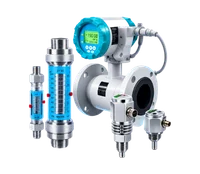
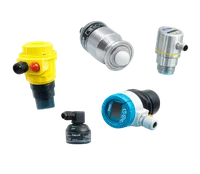
The capacitive proximity sensor is designed with a robust industrial housing and integrated LED indicator for operational visibility. The sensing surface detects variations in capacitance when a target object enters the sensing field. This allows detection of solid objects, liquids, powders, or granular materials without direct contact.
The sensor supports both cable and connector connection options, allowing easy integration into control systems, PLC panels, and industrial automation networks.
Its compact industrial design allows installation in production machinery, tanks, pipelines, packaging equipment, and automated assembly lines.
Total Crossed Beams
In industrial sensing systems, capacitive sensors provide reliable detection coverage that ensures accurate monitoring of objects and materials moving through automated production environments. This consistent sensing capability improves process control and reduces operational errors in manufacturing workflows.
Beam Pitch Options
The sensor design supports different installation sizes commonly used in industrial automation. This flexibility allows engineers to select suitable sensor dimensions based on machine design, detection distance, and installation requirements.
Intrinsic Synchronism
Capacitive sensing technology provides stable detection even in environments where multiple sensors operate simultaneously. This synchronization capability reduces interference between sensors and maintains reliable switching performance within automated systems.
Operational Advantages
Using capacitive proximity sensors offers several operational benefits for industrial automation:
- Reliable detection of liquids and bulk materials
- Reduced mechanical wear due to non-contact sensing
- Improved efficiency in automated production systems
- Simplified installation in tanks, conveyors, and machinery
- Enhanced process reliability and automation accuracy
These advantages make capacitive sensors a critical component in modern industrial automation, enabling precise monitoring, process optimization, and improved production efficiency.