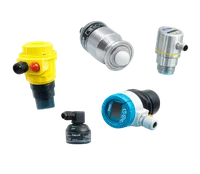
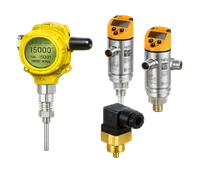
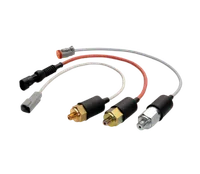
The H2603 Wireless Water Level Sensor is engineered for advanced liquid monitoring in demanding industrial environments. Built for seamless integration into oil & gas facilities, wastewater treatment plants, chemical processing units, HVAC systems, marine operations, and vehicle-based storage systems, this solution ensures real-time visibility of fluid levels. Its wireless connectivity and rugged design make it ideal for modern process control and automation systems.
Key Features
- High-precision level measurement with stable performance
- Wireless communication via 4G and LoRa for remote monitoring
- Durable IP68-rated enclosure for harsh industrial environments
- Wide measuring range suitable for tanks, reservoirs, and pipelines
- Energy-efficient design for long-term deployment
Design & Functionality
The sensor features a compact and rugged construction designed for extreme conditions including moisture, vibration, and temperature fluctuations. Its segment LCD display provides clear on-site readings, while remote data transmission ensures centralized monitoring. This makes it suitable for both fixed installations and mobile applications such as vehicle-mounted tanks.
Total Crossed Beams
The system ensures consistent measurement stability by maintaining uninterrupted sensing signals across varying liquid conditions. This improves detection accuracy even in turbulent or contaminated liquids commonly found in wastewater and chemical industries.
Beam Pitch Options
Flexible sensing intervals allow accurate level detection across different tank sizes and depths. Whether deployed in shallow water systems or deep industrial reservoirs, the sensor adapts efficiently to varying operational requirements.
Intrinsic Synchronism
Advanced internal synchronization ensures real-time data consistency between sensing and transmission modules. This reduces latency and enhances system responsiveness for critical industrial processes.
Operational Advantages
The H2603 significantly reduces manual inspection efforts while improving safety and efficiency. It supports predictive maintenance strategies and minimizes downtime in industries such as oil refineries, marine vessels, and food processing plants. Its wireless capability allows easy deployment in remote or hazardous locations, making it a preferred choice for smart industrial monitoring systems.