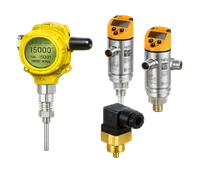
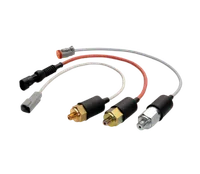
The HPT604 Fuel Submersible Level Transmitter is engineered for precise liquid level measurement across a wide range of industrial applications. Designed for continuous operation in harsh and submerged environments, it is widely used in oil storage tanks, wastewater systems, chemical processing plants, marine vessels, HVAC systems, and vehicle fuel monitoring. Its robust construction and high-performance sensing technology ensure stable output and long-term reliability.
Key Features
This industrial liquid level transmitter offers high accuracy with customizable precision levels, making it suitable for critical process control environments. It supports multiple signal outputs including analog and digital communication, allowing seamless integration into automation systems. Its IP68 waterproof design ensures full protection during long-term immersion in liquids such as fuel, water, and chemicals.
Design & Functionality
The HPT604 features a compact and corrosion-resistant probe with vented cable technology for accurate pressure compensation. The advanced sensing element provides consistent readings even under fluctuating temperature and pressure conditions. Designed for vertical installation, it delivers reliable measurements in deep tanks, reservoirs, and underground storage systems.
Total Crossed Beams
The sensor structure is optimized for stable signal transmission and noise reduction, ensuring precise liquid level detection even in turbulent environments such as fuel tanks and marine systems.
Beam Pitch Options
Flexible measurement ranges allow customization from shallow tanks to deep reservoirs, making it adaptable for industries like oil & gas, wastewater treatment, and chemical storage.
Intrinsic Synchronism
The transmitter maintains synchronized output signals across varying conditions, ensuring compatibility with PLC systems, SCADA networks, and industrial monitoring platforms.
Operational Advantages
The HPT604 improves operational efficiency by providing real-time level monitoring and reducing manual inspection needs. Its durable design minimizes maintenance costs while enhancing safety in hazardous environments such as fuel storage and chemical handling. Suitable for both static and dynamic liquid systems, it supports precise control in process automation, environmental monitoring, and industrial fluid management.