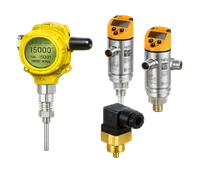
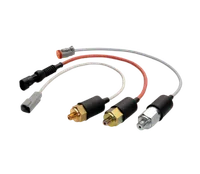
The HPT604-GT fuel level sensor is engineered for accurate and stable liquid level monitoring in generator lower fuel tanks and industrial storage systems. Designed to meet demanding industrial requirements, this sensor provides consistent performance across sectors such as oil & gas, water treatment, HVAC systems, marine environments, and process automation. Its robust construction and flexible output options make it a reliable solution for modern fuel management and liquid level control applications.
Key Features
- High precision measurement with up to ±0.25% accuracy
- Wide level range customization for diverse tank sizes
- Multiple output signals including 4-20mA, 0-5V, and RS485 Modbus
- Fast response time ≤10ms for real-time monitoring
- IP68 waterproof protection for submerged operations
- Wide operating temperature range from -40°C to 80°C
Design & Functionality
Built with durable SUS304 stainless steel compatibility, the HPT604-GT is suitable for non-corrosive liquids such as diesel, oil, and water. The compact probe design allows easy installation in confined generator tanks and industrial containers. Its fixed cable connection ensures stable signal transmission even in high-vibration environments like vehicles and marine engines.
Total Crossed Beams
The sensor utilizes advanced sensing elements that ensure accurate signal detection across the entire measurement range. This enhances reliability in fluctuating liquid levels commonly found in fuel storage systems and process tanks.
Beam Pitch Options
Flexible customization of level ranges from 150mm to 2500mm allows the sensor to adapt to different tank geometries. This makes it ideal for both compact generator tanks and larger industrial storage units.
Intrinsic Synchronism
With integrated temperature compensation (0°C to 80°C), the sensor maintains consistent accuracy even under varying thermal conditions. This ensures synchronized performance across different industrial environments.
Operational Advantages
The HPT604-GT improves operational efficiency by enabling precise fuel monitoring, reducing downtime, and preventing overflow or dry-run conditions. It is widely used in oil & gas facilities, wastewater plants, chemical processing units, HVAC systems, marine vessels, and vehicle fuel systems. Its durability, accuracy, and versatility make it an essential component for industrial automation and process control systems.