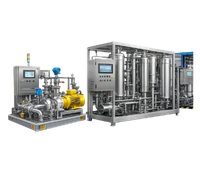
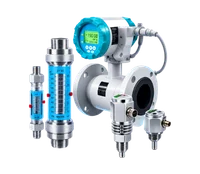
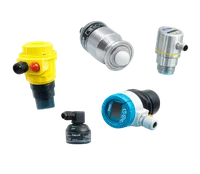
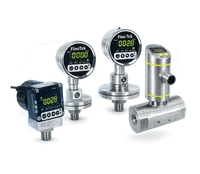
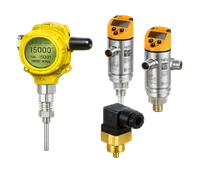
The inductive and conductive conductivity sensors are engineered to enhance CIP (Clean-in-Place) systems by delivering accurate and real-time monitoring of liquid properties. These sensors play a critical role in industrial cleaning processes by detecting cleaning fluid concentration, identifying rinse water residues, and enabling reliable phase detection between different media. Their precision ensures optimized cleaning cycles, reduced resource consumption, and improved operational efficiency.
Key Features
- Accurate detection of cleaning fluid concentration
- Reliable monitoring of rinse water residues
- Fast phase detection between liquids
- Suitable for hygienic and industrial environments
- Durable design for continuous operation
- Real-time conductivity measurement
Application
These conductivity sensors are widely used in industries where cleanliness and process accuracy are essential. Common applications include CIP systems in food processing, beverage production, pharmaceutical manufacturing, and chemical industries. They ensure that cleaning agents are used efficiently and that rinse cycles effectively remove residues, maintaining product quality and compliance with hygiene standards.
Design & Functionality
The sensors utilize inductive and conductive measurement principles to ensure precise conductivity readings. Inductive conductivity sensors are ideal for harsh or contaminated environments, while conductive conductivity sensors provide high accuracy in controlled applications. Together, they offer flexible solutions for different industrial process requirements.
Total Crossed Beams
Optimized sensing technology ensures consistent signal detection across varying liquid compositions, maintaining measurement accuracy even during rapid phase transitions.
Beam Pitch Options
Adaptable sensing configurations allow accurate monitoring across different pipeline sizes and flow conditions, ensuring reliable conductivity measurement regardless of process scale.
Intrinsic Synchronism
Advanced internal synchronization ensures stable readings, minimizing interference and enabling consistent performance in dynamic industrial environments.
Operational Advantages
By enabling precise monitoring of cleaning fluids and rinse water, these conductivity sensors help reduce chemical usage, optimize water consumption, and prevent contamination. Their fast response time ensures immediate detection of phase changes, reducing process delays and improving productivity. With robust construction and reliable performance, they are essential for modern automated CIP cleaning systems.