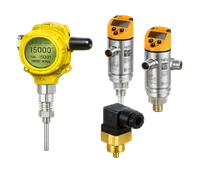
The LM1A…T / LM1FA…T / LM1TA…T level switches with thermostat are engineered for advanced liquid monitoring and thermal regulation in industrial systems. Combining fluid level detection with integrated temperature control, this device enhances operational safety and efficiency across applications such as hydraulic tanks, cooling systems, lubrication units, and industrial processing equipment. Designed to meet modern automation requirements, it delivers consistent performance in demanding environments.
Key Features
- Dual functionality: liquid level monitoring and temperature control
- Durable brass body with NBR float for chemical compatibility
- Multiple mounting options: threaded and flange configurations
- High switching reliability with NO and NC contacts
- Wide temperature range for diverse industrial applications
- IP65-rated electrical connection for protection against dust and moisture
Design & Functionality
This level switch operates through a float mechanism that activates electrical contacts based on fluid level changes. The integrated thermostat adds a critical layer of protection by monitoring temperature thresholds. This combination ensures precise system control, reducing the risk of overheating or fluid imbalance. Its compact yet robust design allows easy integration into existing systems without complex modifications.
Total Crossed Beams
The system ensures stable detection by maintaining consistent float movement and accurate switching response. This enhances reliability in fluctuating liquid conditions, minimizing false triggers and improving system safety.
Beam Pitch Options
Flexible mounting configurations, including M18 threading, flange mounting, and G1” threading, allow installation across various tank sizes and industrial setups. This adaptability ensures compatibility with both compact and large-scale systems.
Intrinsic Synchronism
The synchronized operation between level detection and thermal control ensures that both parameters work seamlessly together. This reduces downtime and enhances operational precision in automated processes.
Operational Advantages
- Prevents system overheating and fluid overflow
- Enhances equipment lifespan through reliable monitoring
- Reduces maintenance costs with durable materials
- Supports automation and smart industrial control systems
- Ideal for manufacturing, processing plants, and fluid management systems