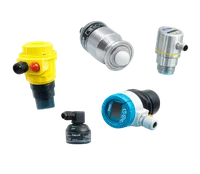
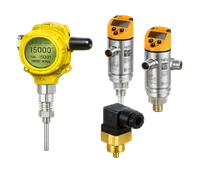
The MN 4020 vibration rod is a precision-engineered level detection device designed for reliable monitoring of bulk solids in industrial environments. Built for applications requiring high sensitivity, it effectively detects full, demand, and empty levels in storage vessels, silos, and process systems. Its robust stainless steel probe ensures durability while maintaining accurate performance even in aggressive conditions.
Key Features
- High sensitivity for detecting very light bulk materials
- Stainless steel probe for corrosion resistance
- Reliable point level detection in solids
- Flexible mounting options for diverse installations
- Adjustable sensitivity and fail-safe logic configuration
- Durable housing with industrial-grade protection
Application
The MN 4020 is widely used in industries handling powders, granules, and fine solids such as cement, plastics, food processing, chemicals, and minerals. It is ideal for monitoring levels in silos, hoppers, and pipelines, ensuring consistent material flow and preventing overflow or empty run conditions. Its ability to detect low-density materials makes it suitable for challenging applications like ash, flour, or lightweight powders.
Design & Functionality
The vibration rod operates using a vibration-based measurement principle. When the rod comes into contact with bulk material, the vibration frequency changes, triggering a switching signal. This ensures accurate detection regardless of material buildup or environmental variations. The compact design with a short extension allows easy integration into confined spaces.
Total Crossed Beams
The MN 4020 design ensures stable vibration behavior, minimizing false signals and enhancing measurement reliability even under varying process conditions.
Beam Pitch Options
Optimized vibration characteristics enable precise detection across different bulk densities, allowing consistent performance across a wide range of materials.
Intrinsic Synchronism
The device maintains consistent oscillation behavior, ensuring stable switching points and minimizing calibration requirements over time.
Operational Advantages
- Prevents overfilling and material loss
- Enhances operational safety in storage systems
- Reduces downtime with reliable switching
- Supports automation in industrial processes
- Performs consistently in harsh and aggressive environments