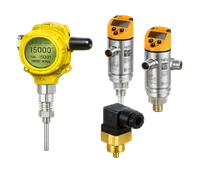
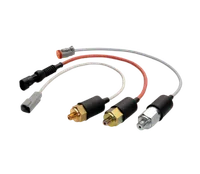
Submersible pressure transmitters are engineered for precise and continuous level monitoring in industrial and environmental applications. Designed to operate in demanding liquid environments such as tanks, boreholes, wells, and wastewater systems, these sensors provide accurate hydrostatic level measurement. Their reliable performance makes them a preferred choice for industries requiring stable and long-term monitoring solutions.
Key Features
These transmitters offer high measurement accuracy combined with long-term signal stability. Built with internally vented cables for pressure compensation, they ensure reliable readings regardless of atmospheric changes. The two-wire current loop design simplifies installation and reduces wiring complexity, making them suitable for both new installations and system upgrades. Optional accessories enable flexible adaptation to different operational environments.
Application
Submersible pressure transmitters are widely used in water treatment plants, groundwater monitoring, storage tanks, and industrial process control systems. They are ideal for measuring liquid levels in drilling wells, reservoirs, and flowing water systems. Their robust construction ensures reliable operation in challenging environments, including wastewater and chemically aggressive media.
Design & Functionality
The compact and durable design allows direct immersion into liquids while maintaining measurement precision. The analogue output signal ensures seamless integration with control systems. Pressure compensation through the vented cable ensures consistent readings, while the rugged housing protects against environmental stress.
Total Crossed Beams
The sensing mechanism is designed for consistent signal transmission, ensuring uninterrupted level measurement even in dynamic liquid conditions.
Beam Pitch Options
Flexible configuration options allow adaptation to various installation depths and measurement requirements, supporting diverse industrial applications.
Intrinsic Synchronism
Stable signal processing ensures synchronized output, enabling accurate real-time monitoring and control across connected systems.
Operational Advantages
These transmitters reduce installation time and maintenance effort due to their simple wiring and durable construction. Their high reliability minimizes downtime, while precise measurement enhances process efficiency. Suitable for continuous operation, they deliver consistent performance across a wide range of industrial and environmental applications.