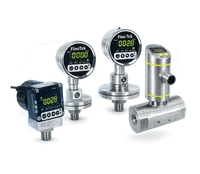
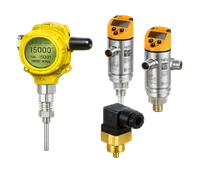
The TGM…S temperature sensor is a robust industrial solution designed for precise monitoring of temperature thresholds in fluid-based systems. Built for automation and process safety, this sensor activates switching output when a predefined temperature is exceeded, ensuring reliable protection of critical equipment. Its compact stainless steel design allows seamless integration into industrial environments where durability and accuracy are essential.
Key Features
- Direct switching when temperature threshold is exceeded
- Adjustable response temperatures between 60°C and 100°C
- High-pressure resistance up to 30 bar
- Stainless steel AISI 316 Ti housing for corrosion resistance
- IP68 / IP69 protection for harsh environments
- Compact G1/2 threaded design for easy installation
Application
The TGM…S sensor is widely used in industrial automation systems where temperature monitoring is critical. It is ideal for fluid-based applications such as cooling circuits, lubrication systems, hydraulic lines, and process pipelines. By detecting overheating conditions early, it helps prevent equipment failure, reduces maintenance costs, and enhances operational safety.
Design & Functionality
This sensor operates as a temperature threshold switch, opening or closing a contact once the preset temperature is reached. The threshold is factory-configured in increments, ensuring precise control. Its rugged construction supports operation in aggressive media and high-pressure environments, making it suitable for demanding industrial processes.
Total Crossed Beams
Not applicable for this sensor type, as it operates on thermal switching rather than optical detection.
Beam Pitch Options
Not applicable; the sensor uses temperature threshold activation instead of beam-based sensing.
Intrinsic Synchronism
The TGM…S sensor ensures consistent switching performance through stable thermal response calibration. Its predefined switching points eliminate the need for complex synchronization, improving reliability in automated systems.
Operational Advantages
- Prevents overheating damage in industrial systems
- Reduces unexpected downtime and repair costs
- Ensures consistent temperature monitoring
- Suitable for harsh and high-pressure environments
- Enhances safety in automated fluid processes