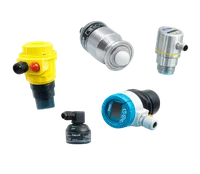
The VN 6050 vibrating fork level sensor is engineered for precise point level detection in dry and free-flowing bulk solids. Designed for industrial storage and process vessels, this sensor ensures consistent monitoring of material levels, helping maintain smooth operations. Its high sensitivity makes it ideal for detecting even very light bulk solids, improving accuracy in demanding applications.
Key Features
- High sensitivity for low-density materials
- Flexible cable extension up to 20 meters
- Reliable switching performance in harsh environments
- Large housing for easier wiring and installation
- Flameproof and safety versions for hazardous areas
- Adjustable sensitivity and output delay
- Multiple signal output options for system integration
Application
The VN 6050 is widely used in industries handling powders, granules, and lightweight solids. It performs effectively in silos, storage bins, and processing units. Common applications include cement plants, food processing facilities, chemical industries, and material handling systems where precise level detection is critical to prevent overflow or empty runs.
Design & Functionality
This vibrating fork sensor operates using a tuning fork principle that detects material presence through frequency changes. When bulk material contacts the fork, vibration is dampened, triggering a reliable switching signal. The device supports multiple mounting positions, including top and socket installation, making it adaptable to various vessel designs.
Total Crossed Beams
The robust sensing element ensures consistent detection performance even in dynamic material flow conditions. Its design minimizes false signals caused by vibrations or environmental disturbances.
Beam Pitch Options
The VN 6050 offers flexible probe lengths, allowing accurate positioning of the switching point exactly where needed. This adaptability ensures optimized performance across different tank sizes and configurations.
Intrinsic Synchronism
The sensor maintains stable operation with minimal drift, ensuring consistent response even in changing process conditions. This reliability is crucial for maintaining uninterrupted industrial workflows.
Operational Advantages
- Prevents overfilling and material loss
- Enhances process safety and automation
- Reduces maintenance with durable construction
- Supports operation in extreme temperatures and pressures
- Suitable for hazardous environments with certified safety options